
Their London and their times - Getting by in 70s London
Social Work
I don’t know what you really do in your social work, and I know that you work hard. But somehow it’s still something about you, with your salaries and pension contributions, looking from a distance at the poor people who don’t have those.
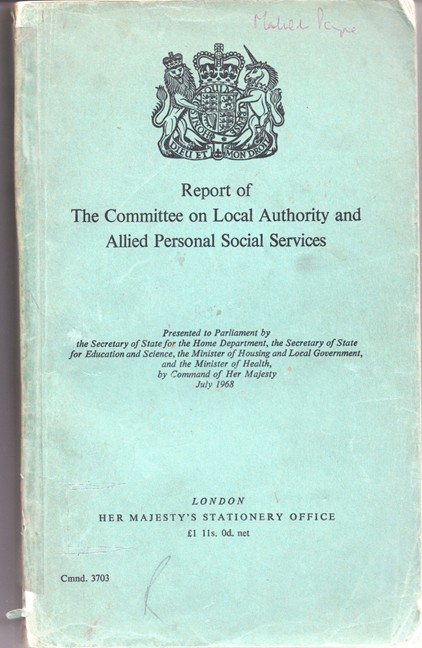
For the professional social work staff, the 1970s saw fragmented services unified into single Social Services Departments with well-mapped career paths. Before 1970 there were eight separate membership organizations for different specialist social workers, including child care officers, mental welfare officers and what were called moral welfare officers. There were also separate council children’s, welfare and mental health departments, with psychiatric and medical social workers employed by the NHS.
The 1970 implementation of the 1968 Seebohm Report’s recommendations brought together this patchwork of competing services into one local social services department. There was also the creation of one professional qualification relevant for all social workers and the creation of the British Association of Social Workers, which provided a unified professional organization. A single Central Council for Education and Training in Social Work was set up at the same time.
The 1970 implementation of the 1968 Seebohm Report’s recommendations brought together this patchwork of competing services into one local social services department. There was also the creation of one professional qualification relevant for all social workers and the creation of the British Association of Social Workers, which provided a unified professional organization. A single Central Council for Education and Training in Social Work was set up at the same time.
 It took several years for local authorities to reorganize their services to comply with the new Act. The expectation that social workers could act as “generic workers”, taking on cases from each of the previous specialist groups, was challenging.
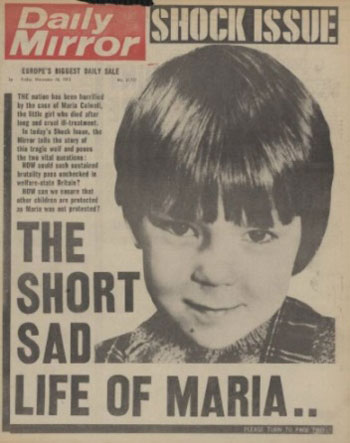
The consequences of the professionalization of social work became clear with the Maria Coldwell scandal. Maria was seven years old when she was killed, in 1973, by her stepfather. The subsequent inquiry was held in public. The social worker who had responsibility for the case was seen as a professional with full liability for any shortcomings. A far cry from the earlier days when social work was primarily staffed by volunteers. Maria Coldwell’s social worker was described in the inquiry as ‘the defendant’ and was threatened and harassed when arriving and leaving the inquiry.
The political right complained about a perceived lack of efficiency and effectiveness and the left grew more concerned that social problems were becoming individualized, hiding the structural causes behind social problems.