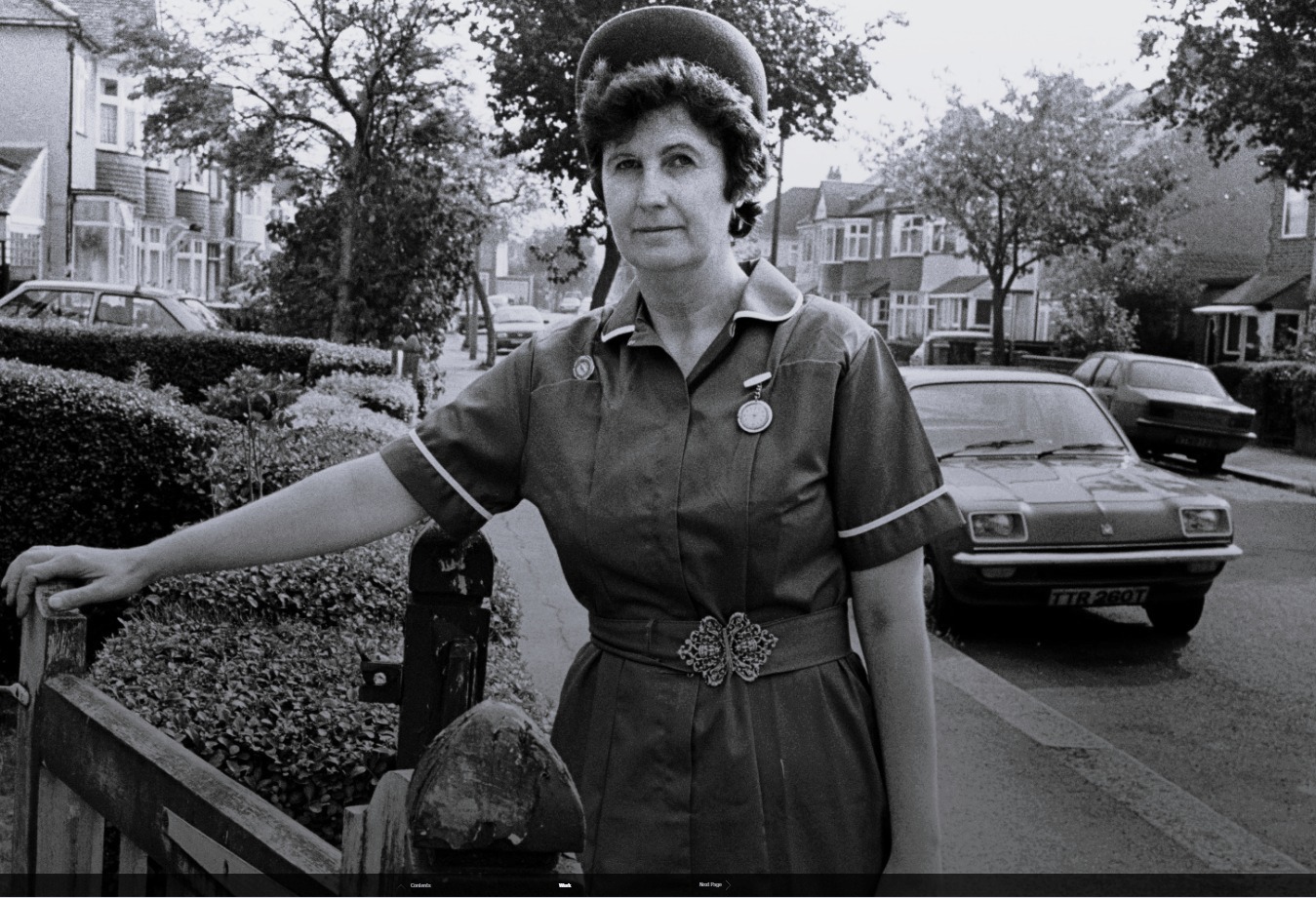
Their London and their times - Getting by in 70s London
District Nurses and Midwives
There is a letter, thanking Margot for her service as a midwife, and there is a certificate from The Queen’s Institute of District Nursing… Maybe Margot changed tracks because she preferred caring for adults, tending the dying, like she did with her aunt. Maybe she did not want to carry the weight of children, the responsibility for their future happiness or indeed for their continued living. She herself was a load that her parents did not want to bear.
In the UK, District Nurses visit patients in their homes, primarily focusing on complex care, chronic illnesses, and end-of-life care for the elderly. Midwives provide care and guidance to women and newborns, providing care from the antenatal stage through labor and postnatal.
In the ‘80s, the professional career paths for nurses and midwives were increasingly well-defined similar to the changes affecting social work. In the early 1980s, the United Kingdom Central Council for Nursing, Midwifery and Health Visiting replaced nine separate regulatory bodies, standardizing the profession and granting midwives a Statutory Midwifery Committee to protect their distinct clinical identity.
However, within the UK nursing profession, the attractiveness of midwifery as a vocation was gradually overtaken by that of district nursing. In England the title of ‘midwife’ became legally protected after 1902. To describe herself as a midwife a woman (and it was always a woman) had to have been trained, examined and recognized by the Central Midwives Board. The period between 1948-1974 was a golden era for midwifery. It was a respected profession and it gave skilled women a way forward that was denied within the male-dominated hospital system. In 1974, midwifery care was subsumed into the NHS and the hospital domination of births began.
The first person to work as a ‘District Nurse’ was a private nurse employed to nurse a dying woman at home in Liverpool during her final illness in 1859. After her death, the widower paid her to deliver nursing care to poor people in the city in their homes. Her patients lived in grim conditions. Florence Nightingale subsequently helped to establish a district nurse training school in Liverpool.
District nurses and midwives had more autonomy in their roles than staff nurses in hospitals. In the 1970s, hospital nursing was highly hierarchical, regimented, and focused on acute institutional care.