
Their London and their times - The culture and politics of the time
Thatcher’s vengeance on London
Thatcher has done the unthinkable but, thinkably, it shows what she is all about. She canceled the London elections to ensure that the wishes of the degraded urban elite, spoiled by their sense of entitlement to housing, health and education subsidized by their hard-working, tax-paying, own-bootstrapping compatriots, could not find any expression at the ballot box.
In the 1970s, London was still emerging from the damage of the war. Some areas remained derelict after being bombed out and houses still standing could be squalid and overcrowded. But London had become sunnier as the Clean Air Act passed decades earlier, at last, achieved its goal of preventing smog.
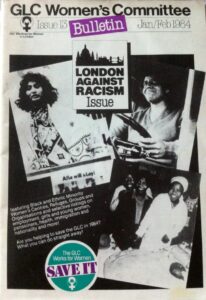 The Greater London Council (known universally as the Gee Ell See) was established in 1965. By the 1970s, it was changing London. It built new tunnels under the Thames and flood protection for a city at risk from rising sea levels. It funded arts programs and fought air pollution. Ken Livingstone, an enthusiastic socialist, became leader of the GLC in 1973. One of the first things he did was to cut transport fares by 25%. He promoted a new brand of left-wing politics with an emphasis on minority rights. It was sometimes known by its sympathizers as “the rainbow coalition”, and mocked by its detractors as "the loony left". Livingstone’s stances horrified Conservatives.
In the mid-1970s, the Labour Party and the GLC was attempting to respond to an impressive array 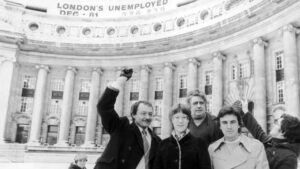 of pressure groups, with gender and the politics of sexuality finding their voice.
In 1981, Ken Livingstone declared London a “nuclear-free zone”, declined an invitation to the royal wedding, publicly supported Irish republicanism and erected a sign on top of County Hall proclaiming the number of unemployed in London. Thatcher was determined to stifle this political irritant. The Greater London Council was abolished by the Conservative Government on 31st March 1986.
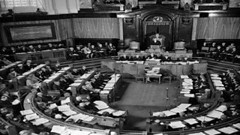
Greater London Council